Cannabis Greenhouse Technology: HVAC(D), Glazing & Controls
Optimize your cannabis greenhouse with integrated technology designed for yield, efficiency, and environmental precision.
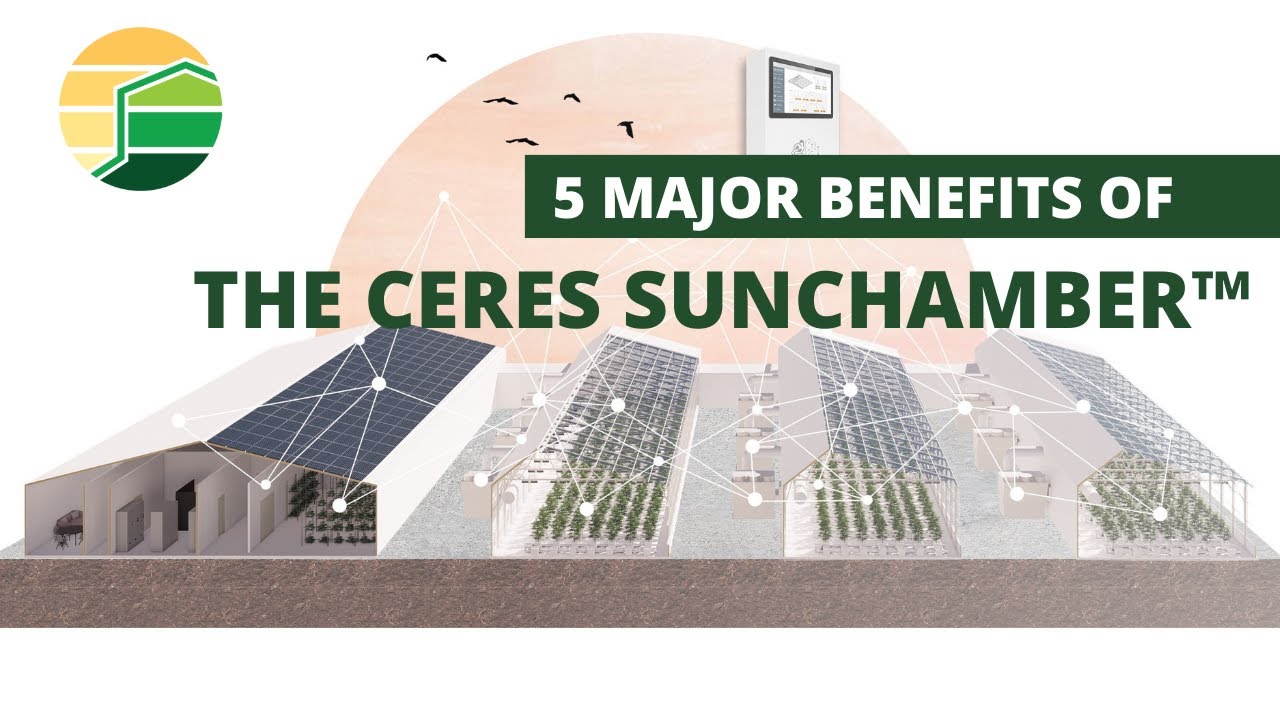
Ceres combines advanced HVAC and dehumidification systems, high-performance ETFE glazing, and intelligent greenhouse controls to create cultivation environments that perform consistently at scale.


Integrated Technology for High-Performance Cannabis Cultivation
Cannabis cultivation demands tight environmental control. Temperature, humidity, light, and airflow must work together—not in isolation.
Our technology stack is designed as a fully integrated system, helping operators:
- Reduce energy consumption
- Maintain ideal growing conditions
- Improve consistency across crop cycles
- Simplify operations through automation
HVAC & Dehumidification Systems
Precise Climate Control for Cannabis Production
Maintaining proper temperature and humidity is critical for preventing mold, maximizing yield, and ensuring product quality.
Our HVAC and dehumidification systems are engineered specifically for cannabis greenhouse environments.
Key Benefits:
- Tight humidity control to prevent mold and mildew
- Optimized airflow for uniform plant growth
- Reduced energy use compared to traditional systems
- Integrated design with greenhouse structure and controls
Why It Matters:
Poor humidity control can destroy crops and reduce yield. Our systems ensure stable conditions across all growth stages.


ETFE Glazing Systems
Maximize Light, Reduce Energy Costs
ETFE (ethylene tetrafluoroethylene) glazing allows more usable sunlight into your greenhouse while improving insulation and durability.
Key Benefits:
- High light transmission for better plant growth
- Full-spectrum sunlight, including UV
- Lower reliance on artificial lighting
- Durable, long-lasting material with low maintenance
Why It Matters:
Light quality directly impacts cannabis potency and yield. ETFE helps you harness natural sunlight while reducing energy costs.
SunSense™ Greenhouse Controls
Intelligent Automation for Consistent Results
SunSense™ is our advanced greenhouse control system that automates environmental management across your facility.
Key Capabilities:
- Real-time monitoring of temperature, humidity, and light
- Automated climate adjustments
- Integration with HVAC, dehumidification, and lighting systems
- Data-driven insights for optimization
Key Benefits:
- Reduce manual intervention
- Improve crop consistency
- Increase operational efficiency
- Centralized control of complex systems
Why It Matters:
Manual control leads to variability. Automation ensures consistent conditions and predictable outcomes.


Why Integration Matters
Systems Designed to Work Together
Most greenhouse systems fail because components are installed independently.
Ceres designs technology as a unified system, ensuring:
- Seamless communication between systems
- Optimized performance across all environmental factors
- Reduced inefficiencies and operational issues
Access Cannabis Brochures

By clicking the button above, you agree to receive emails from Ceresgs.com. Unsubscribe at any time.
Greenhouse & Technology Videos

Greenhouse Technology FAQs
Yes. Contact us for more information.
Yes, the SunSense™ system can monitor and control CO2 levels in the greenhouse.All of our controllers monitor CO2 and can dose in real time based on the CO2 concentration in the greenhouse or other grow rooms.
The customer owns their data forever. However, we do require access to it for facility optimization. Data sets will not be shared with or viewed by other customers.
The dashboard allows the owner to set levels of access to employees, so you control who sees your data and who can control the facility.
Data can be accessed via our data analytics dashboard. From there, the customer can see all historical data from each sensor, equipment run times and operational modes, power consumption, etc.
The dashboard shows the details of your facility operations. This includes live sensor data, current operational modes of all of your equipment, along with any control inputs required for operation, user control, and alarms.The data analytics dashboard shows historical trends for all sensors and equipment in the facility, as well as power consumption breakdowns to understand operational efficiency.
The dashboard’s pictures and equipment will be customized to your facility, but we do not change the overall format/layout of our dashboard.
Ceres’ ETFE is a unique glazing material for greenhouses because it allows for the penetration of full spectrum light, thereby allowing the plants in a greenhouse to grow under the same light conditions as they would do outdoors. With diffuse ETFE the light conditions in the greenhouse are even better than they would be outdoors, as the plants receive even more light.
Because ETFE is UV transmissive, plants are able to create higher levels of terpenes (flavors, colors, and smells) as compared to polycarbonates (and most types of glass). UV light also helps reduce pests and pathogens in the greenhouse environment.
The ETFE roof and wall systems are the longest lasting glazing systems (greenhouses already in operation for 40 years and more in Europe) and require very little maintenance. Occasional cleaning with water may be recommended depending on the location and degree of dust accumulation.
ETFE is the most hail resistant glazing material (that also has full light spectrum transmission), the most seismic activity resistant, and the most fire rated glazing material as well.
ETFE film is priced by its thickness and type (diffuse or clear). Film thickness varies in practical applications from as low as 60um for internal walls, to over 300um for the highest hail size and snow/wind loads. The thinner ETFE film prices are comparable to double layer polycarbonate.
Diffuse ETFE glazing is also available with an anti-drip coating, to ensure that condensation on the ETFE does not drip onto the plants. The anti-drip coatings increase the price by about 30%.
Ceres offers a completely engineered and engineer stamped roofing solution. This service includes engineering, aluminum fastening tracks, hardware such as fasteners, and installation instructions.
ETFE is a great option for a greenhouse glazing material where the fire code requires the highest fire rated material, when there is earthquake potential, or when high resistance to hail, wind and snow loads are required.
ETFE may also be a great option for complex building forms.
If you are interested in a long-term solution, ETFE is a better option, as it does not require replacement nearly as often.
As ETFE is UV light transmissive, it is the better option if the quality of the crop is important.
ETFE offers an almost unlimited service life. Greenhouses that have had ETFE installed in the early 1980’s have been in continuous operation ever since. ETFE will last longer than any other plastic glazing material and is comparable with glass in its lifespan. ETFE can be completely recycled if it is no longer needed.
The films come with a 10 year warranty from the manufacturer. It should be noted that the warranty does not suggest that the film or the anti-drip coating will diminish in quality over time.
ETFE is not brittle like Acrylic, Glass or Polycarbonate. A variety of independent lab tests have shown that ETFE films, with a thickness of 250um, can withstand hail with 2 inches (50 mm) and more –causing only indentations in the ETFE glazing. ETFE films are classified Hail class 3. In most cases, any hail caused indentations in the ETFE can be repaired with a thermal gun ( i.e hair dryer) or ETFE repair tape without losing its quality and characteristics.
Acrylic sheets are warranted up to ¾” (20 mm). Hail above that size will cause acrylic sheets to break. Thick 3 layer polycarbonate will suffer irreparable indentions.
ETFE can be installed on any greenhouse, such as rectangular (greenhouse) buildings with standard roofs (glass or plastic), center gable or off-set gable, hoop houses, chinese style greenhouses, custom greenhouses, etc. When in doubt, contact us to find out if ETFE is the best solution for your new or existing greenhouse.
The number of layers will vary regionally, and depends on the level of insulation desired. Contact us for more information.
ETFE is an electronegative, hydrophobic (does not like water) material. Fine dust can stick to the surface of the ETFE both from the outside and inside of the greenhouse. Since ETFE does not ‘like’ water, any dust collecting on the ETFE surface will accumulate in any water droplet that hits the ETFE surface. As a result, ETFE is highly cleanable with water. For the outside layer, rain is sufficient for cleaning itself. If extra cleaning is required, common household cleaners can be used to clean the surface without any problems.
Ready To Optimize Your Cannabis Greenhouse?
Talk to our team about upgrading your greenhouse technology for better performance and efficiency.